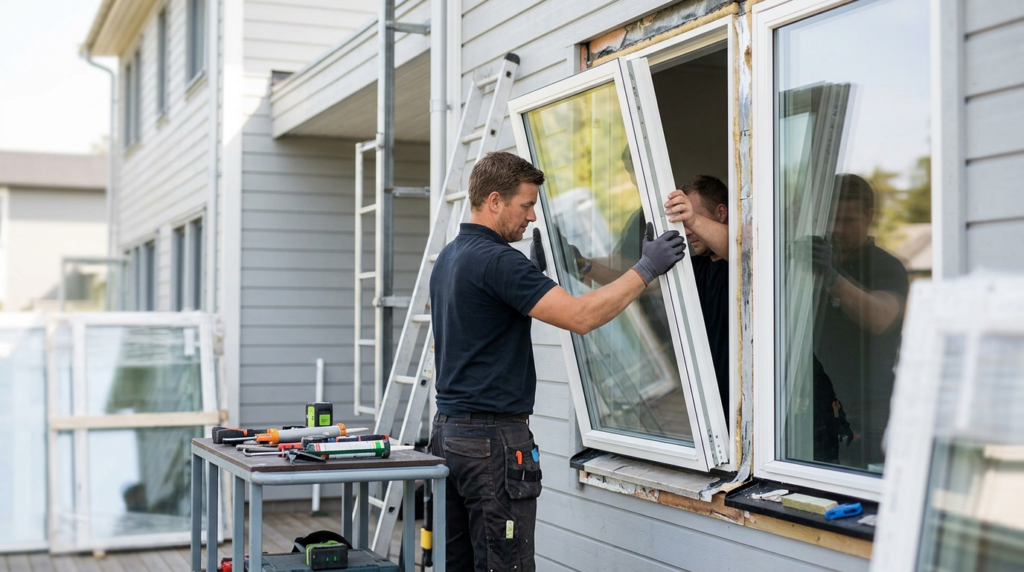
Quick answer: Choose replacement window installers by confirming they measure each opening, explain pocket vs. full-frame methods, and provide a written scope that covers water management (flashing/sill pan), insulation, trim/capping, and disposal. Ask how they handle rot, repeated leaks, and out-of-square openings, and have them state any installation tolerances in writing. Compare workmanship vs. product warranties, requested documents, and clear red flags before signing.
What a Good Installer Does Before You Sign
A solid quote starts with a careful in-home evaluation, not a quick glance. The installer should measure every window opening, check for out-of-square frames, and look for water-staining, soft wood, or bubbling paint that can signal hidden rot. They should also ask what problems you’re trying to solve—drafts, hot rooms, condensation, noise—so the window package and install approach match the goal.
Decide on the installation method using clear triggers, then confirm the installer agrees in writing. A pocket (insert) replacement keeps the existing frame; it can be a reasonable choice when the frame is sound, leaks haven’t been recurring, and you’re mainly upgrading glass and operation. A full-frame replacement removes the old frame down to the rough opening; it’s typically the better call when you see visible rot, have repeated leaks, or need to correct a poorly flashed opening. If an opening is noticeably out of square, ask the installer to state their acceptable tolerance in writing and how they’ll correct it.
Ask what’s included in the written scope: protecting floors, removing and hauling old windows, repairing minor rot, reinstalling or replacing interior stops, exterior capping or trim, and sealing/insulating the gap. If you want to request an estimate or ask what their written scope includes, contact replacement window installers mid-project planning so you can compare it against other bids.
Hot, Humid Climate Questions to Ask in Georgia
In Georgia, the comfort complaints you’re trying to fix often relate to solar heat gain and humidity. Ask each installer to write down the window’s performance ratings (NFRC label values) and explain them in plain language: SHGC (solar heat gain coefficient) for sun control and U-factor for insulation. Don’t accept “energy efficient” as the whole answer; ask what SHGC and U-factor you’re actually buying and whether the recommendation changes for west-facing rooms that get strong afternoon sun.
Also ask how they set expectations for condensation. Interior condensation can come from indoor humidity, air leaks, or a cold glass surface. Have them explain what they will do on the install side (air sealing, insulation around the frame, proper exterior water management) versus what you may need to manage inside (bath fans, dehumidification, keeping blinds from trapping moisture). If you’ve had fogging between panes, ask how insulated glass seal failures are handled under the product warranty.
If noise is a concern, ask whether the proposal changes glass thickness or configuration (for example, laminated glass or asymmetrical panes) and whether that affects lead time. Get those options priced as separate line items so you can compare apples to apples.
Estimate Comparison Checklist (Use This Table)
Use the same checklist for every bid and mark each line as pass/fail based on what’s written, not what’s said verbally.
| What to Compare | What You Want in Writing | Pass/Fail Red Flags |
|---|---|---|
| Flashing / sill pan | Specific plan for water management (flashing tape and/or sill pan strategy where needed) and where it will be installed | “We just caulk it,” or no mention of flashing/sill details |
| Insulation / air sealing | Insulation type around the frame (e.g., low-expansion foam vs. fiberglass) and air-sealing approach | No insulation specified, or vague “we’ll seal it up” without materials |
| Trim, capping, exterior finish | Exactly what happens to interior trim and exterior cladding/capping; color/finish responsibilities | Trim work treated as an assumption, not a scope item |
| Disposal and site protection | Removal/haul-away, cleanup, floor protection, and who handles debris | Disposal not included or “owner responsible” surprises |
| Rot or damage discovery | How rot is priced (unit rate, time-and-materials, or pre-set allowances) and who approves changes | “We’ll see when we get in there” with no pricing method |
| Out-of-square openings | Installer-stated tolerance and correction method (shimming, reframing, full-frame trigger) | No tolerance stated; refusal to put it in writing |
| Documents to request | Written scope, warranty terms (product vs. workmanship), proof of license/insurance as applicable | Only a one-page price sheet; warranty language missing or contradictory |
After you fill this out, pick the bid that’s most complete and least ambiguous. A higher price can be justified when it clearly includes water management, trim, and a defined process for surprises—because those are the items that most often create change orders and callbacks.
Decision Steps Before You Commit
Step 1: Confirm the problem you’re solving. If you have repeated leaks, visible rot, or stained drywall near the opening, prioritize diagnosing water entry and plan for full-frame replacement or repair of the rough opening—not just swapping the sash. If the issue is drafts or hard-to-operate windows with otherwise sound frames, a pocket replacement may be reasonable.
Step 2: Require a written scope and written performance details. The scope should spell out flashing/sill strategy, insulation type, trim/capping, and disposal. The window description should list the glass package and NFRC ratings. Ask the installer to state any installation tolerances (level/square/plumb) in writing and what happens if your openings exceed them.
Step 3: Separate warranties and responsibilities. Get workmanship warranty terms in writing and confirm who you call for leaks, sticking sashes, or trim issues. Product warranties cover the unit; workmanship covers the install. If the paperwork blurs the two, ask for clarification before you sign.
To request an estimate or ask for a written scope you can compare against other quotes, contact Georgia Home Windows.