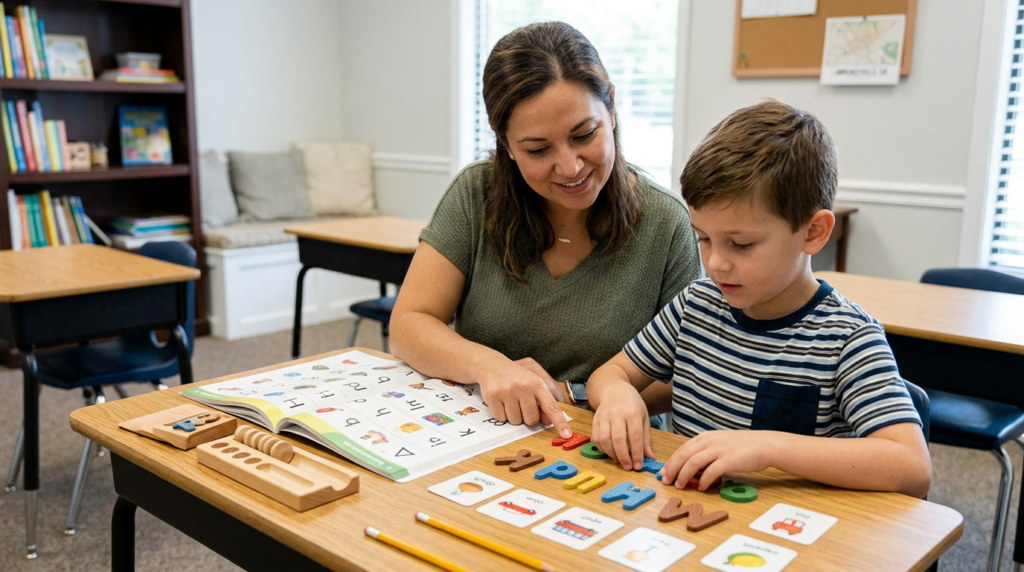
Quick answer: A dyslexia remediation program typically includes a structured, explicit approach to reading and spelling that teaches sound–symbol relationships, decoding, encoding, fluency, and comprehension in a step-by-step sequence. Most programs start with an evaluation of skills, then provide frequent, targeted instruction with ongoing progress checks. Good remediation also addresses writing and study strategies and coordinates goals with families and schools.
What “Remediation” Means (And What It Doesn’t)
Dyslexia remediation is specialized instruction designed to change reading outcomes, not just provide accommodations. The core is explicit teaching of phonological awareness, phonics, and spelling patterns, with lots of guided practice and immediate feedback. A true program is systematic (skills are taught in a planned order) and cumulative (new learning constantly reviews and builds on earlier skills).
Families sometimes confuse tutoring, intervention, and remediation. Tutoring can help with homework or general reading practice, but remediation targets the underlying decoding and encoding weaknesses that make reading hard in the first place. If you’re comparing options, ask how the program teaches decoding and spelling—those are usually the sticking points for students with dyslexia—and how progress is measured over time. If you’re looking locally, a dyslexia remediation program in Lawrenceville, GA should be able to explain its instructional sequence in plain language and show how it adjusts instruction when a student stalls.
Remediation vs Accommodations: You Often Need Both
Remediation is skill-building instruction. It aims to improve the student’s ability to read and spell through direct teaching and practice. Examples include explicit decoding lessons (like syllable types and blending), structured spelling/encoding practice with dictation, and morphology instruction (prefixes, roots, suffixes) to tackle longer words.
Accommodations are supports that reduce the impact of dyslexia while skills are developing. Common examples include audiobooks or text-to-speech for grade-level content, extra time on tests and written assignments, and reduced-copying demands (like providing notes or allowing speech-to-text). Accommodations can protect confidence and access to learning, but they don’t replace remediation.
Core Components You Should Expect
Most effective dyslexia remediation programs share a few building blocks. Instruction is typically multisensory (students see, say, hear, and write patterns), but the key is not the materials—it’s the explicit, structured teaching and the volume of accurate practice.
In practical terms, sessions often include: reviewing previously taught patterns; direct teaching of a new sound, syllable type, or spelling generalization; controlled reading practice (texts that match what’s been taught); spelling and dictation to connect reading to writing; and fluency work to build speed and accuracy. Comprehension is addressed too, but usually after decoding becomes more reliable, since comprehension strategies can’t fully compensate for weak word reading.
Writing support may show up as sentence construction, grammar, and organizing ideas. Many students with dyslexia also benefit from instruction in morphology (prefixes, roots, suffixes) because it helps with longer words and vocabulary.
How to Choose a Provider and Track Progress
You should see progress in specific skills, not just a general sense that reading is “better.” Ask what baseline data is collected (for example, decoding accuracy, nonsense-word reading, spelling patterns, oral reading fluency, and error types) and how often it’s reviewed. Frequent, small check-ins are common; more formal re-checks may happen every few months.
Use this quick checklist when you call or tour a program: What evaluation is used (and what skills it measures); what a typical lesson looks like (review, new teaching, controlled reading, spelling/dictation, fluency); how instructors are trained to deliver structured literacy (ask what training model they follow); how often sessions meet and expected practice between sessions; progress-monitoring cadence (weekly skill checks vs monthly/quarterly reviews); and parent communication (what you’ll receive and how often).
Scheduling matters more than many families expect. As a general estimate, remediation is often scheduled about 2–4 times per week at the start, then adjusted based on severity, age, stamina, and goals. Consistency usually beats occasional long sessions, and a provider should be able to explain why a given frequency matches your child’s needs.
If you’re looking for support in Lawrenceville, contact Sage School to ask what services are available and how they coordinate with schools.