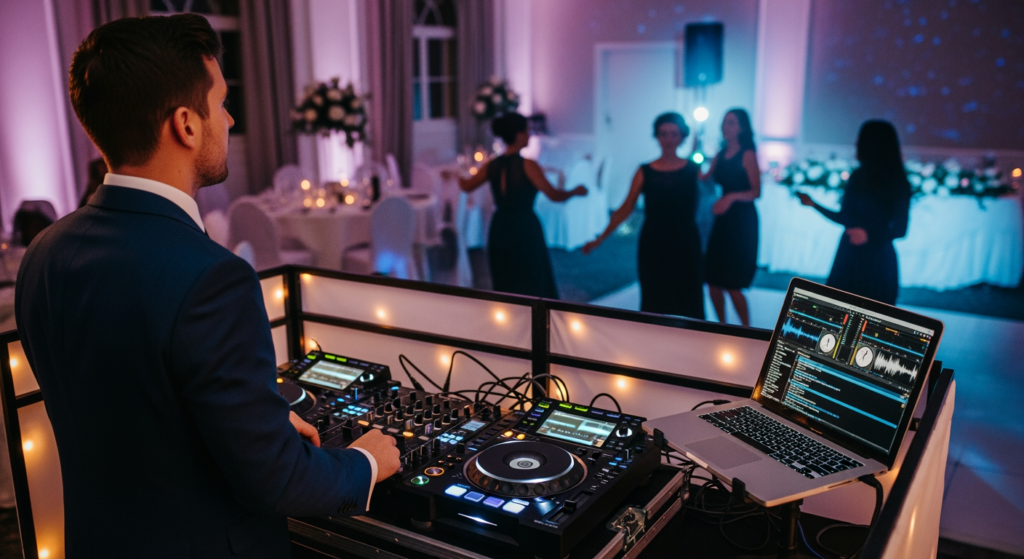
I remember the first wedding I helped plan where music made the whole night come alive, and that’s why finding the right wedding dj hire feels so important. Between licenses, timelines, and family playlists, it can get overwhelming fast, but there are clear steps you can take to make sure the soundtrack of your day sounds exactly how you imagine. If you’re unsure about legal requirements or timing for your ceremony and reception, official guidance is available on GOV.UK.
Why the right DJ matters more than you think
Music is the emotional backbone of a wedding — it sets mood, bridges moments, and can even smooth over small hiccups. A skilled wedding DJ does more than press play. They read the room, manage transitions, and act as an experienced events partner who keeps your timeline moving. I’ve seen how a well-timed tempo shift can move guests from chatter to dance floor, while a poor set list can empty a room within minutes.
Current trends shaping wedding entertainment
Trends change fast, and the best DJs stay ahead without making your day feel like a trend show. Right now, these are worth noting:
- Hybrid and streamed celebrations — couples are blending in-person ceremonies with live-streaming for remote guests, and DJs are mixing sets that sound great both live and over a feed.
- Silent discos for later hours — perfect for venues with noise curfews or couples who want two simultaneous music vibes without raising the volume for neighbors.
- Personalised playlists blended with live mixing — rather than rigid playlists, DJs are offering curated sets that mix your must-haves with crowd-pleasers, keeping things fresh.
How to evaluate a wedding DJ hire
When I vet a DJ for a wedding, I focus on experience, communication, and technical competence. Here’s how you can evaluate candidates without getting lost in jargon.
Experience and specialization
Ask how many weddings they’ve done and whether they regularly perform in venues like yours. A DJ who knows local venues, suppliers, and timing expectations will save you time and stress. Wedding nights are unique: speeches, first dance, cake cutting, and surprise moments all need smooth transitions.
Style and musical flexibility
Look for a DJ who can match your musical taste but also read a crowd. If you want indie hits, classical ceremony music, or 80s floor-fillers, ask for sample mixes or short recordings that show their range. A rigid “I only play X” approach isn’t ideal — adaptability is key.
Essential questions to ask before you book
Bring these questions to your consultation so you leave confident and informed:
- Do you have public liability insurance and equipment backup plans?
- How do you handle learning our must-play and do-not-play lists?
- Can you provide references or recent wedding playlists and mixes?
- Do you act as MC, and are there additional fees for this service?
What a realistic budget should cover
Prices vary by region, experience, and included services. A reliable DJ fee typically covers planning time, equipment, travel, set up and breakdown, and performance. Hidden costs can include extended hours, MC duties, or special equipment like extra speakers or lighting. I recommend clear, written quotes that list what’s included so there are no surprises on the day.
Timeline and planning: when to book and what to finalize
Good timing makes everything easier. Here’s a simple timeline I use with couples I advise:
- 9–12 months out: Research DJs, check availability, and read reviews. Secure your date with a deposit.
- 3–6 months out: Finalise must-play/do-not-play lists, ceremony music, and first dance song. Confirm arrival and soundcheck times with your venue.
- 2–4 weeks out: Send a detailed timeline including speeches, cake cutting, and any surprises. Confirm technical and power needs with the venue.
Playlist planning without the overwhelm
Curating music is fun, but it can get overwhelming. I recommend these practical steps that help you keep control while trusting the DJ’s instincts.
- Create a short “must-play” list of 10–15 songs that define the vibe you want for the evening.
- Make a “do-not-play” list to avoid awkward moments with exes or specific tracks that clash with your taste.
- Allow your DJ creative control for roughly 70–80% of the night so they can read the crowd and maintain energy.
Technical checklist for the venue
Even a great DJ can struggle without the right technical setup. Confirm these items with your venue and DJ to prevent delays and sound issues.
Essentials include adequate power supply near the performance area, a covered space for gear if outdoors, easy loading access, and a clear staging plan that keeps sound away from quiet hotel rooms or neighbors. Noise curfews are common, so ask the venue about local restrictions and plan your set end time accordingly.
How DJs support seamless ceremony to reception transitions
The transitions are where a DJ’s experience really shows. A seasoned pro will coordinate cueing for processionals, control volume for vows, and set atmosphere as guests move to the reception. If you have readings or live musicians during the ceremony, make sure those cues are rehearsed so audio levels are balanced and natural when you move from vows to signing.
Managing common wedding day problems
Problems happen, but they don’t have to derail your whole evening. Here are the most common issues and how a good DJ helps solve them:
- Noise complaints: DJs can switch to lower-volume mixes, re-route speaker placement, or switch to a silent disco setup to keep the party going without breaking rules.
- Speakers failing: Professional DJs bring backups for key equipment and have tested alternatives like battery-powered amps when needed.
- Timing overruns: The DJ should be coordinating with your planner or venue contact to adjust the music flow so speeches and service aren’t rushed.
How to work with your DJ on the day
Clear communication on the day is everything. Assign one point person — a planner, family member, or yourself — to relay timing changes. Share a final timeline and make sure the DJ has a quiet spot for their kit if they need to step away. I always suggest a short soundcheck at least 60–90 minutes before guests arrive to make final level adjustments and confirm the sequence of songs for key moments.
Eco-friendly and low-noise wedding options
If sustainability or noise restrictions are a priority, there are smart options. Silent discos minimize disturbance while offering multiple music channels for guests to choose from. DJs can also provide LED lighting and battery-powered equipment that reduce power consumption. For couples who want a low-impact celebration, ask potential hires about green options and what they already do to lower footprint.
Hiring checklist: what to get in writing
When booking, insist on a written agreement that includes these essentials. Having everything documented protects you and the DJ and prevents misunderstandings as your big day approaches.
- Confirmed date, arrival and departure times, and total hours covered.
- Clear fee breakdown, deposit amount, and cancellation terms.
- Written lists of must-play and do-not-play songs and any MC responsibilities.
- Insurance confirmation and backup equipment plans.
Small touches that make a big difference
A few thoughtful extras can elevate the experience. Coordinate with your DJ about announcing the cake cutting or signaling the last dance with a specific song. Consider giving the DJ a short list of meaningful songs to play during quieter parts like dinner so there’s a consistent atmosphere throughout. A DJ who also communicates with your photographer can help capture the best moments by signalling cues for big reactions like the first dance or bouquet toss.
Cost vs. value: getting the right balance
It’s tempting to hire the cheapest option, but remember you usually get what you pay for. A more experienced DJ typically brings reliability, smoother timelines, and better crowd control—so the value often outweighs the extra cost. Think of your DJ as an investment in the evening’s mood and flow; done well, they keep guests on the dance floor and create memories you’ll cherish.
Closing thoughts and simple next steps
If you’re just starting, pick three DJs you like, ask the essential questions listed above, and listen to recent mixes to test how they mix live energy with your style. Book the one who communicates clearly, shows flexibility, and understands the flow you want for your day. A short, clear contract will keep everything on track so you can focus on the celebration.
Ready to find a reliable, crowd-pleasing DJ for your wedding? For hands-on planning help and a team that treats your day like their own, visit Spin Sisters. I recommend reaching out early to lock in dates and start building the soundtrack that will make your wedding unforgettable.