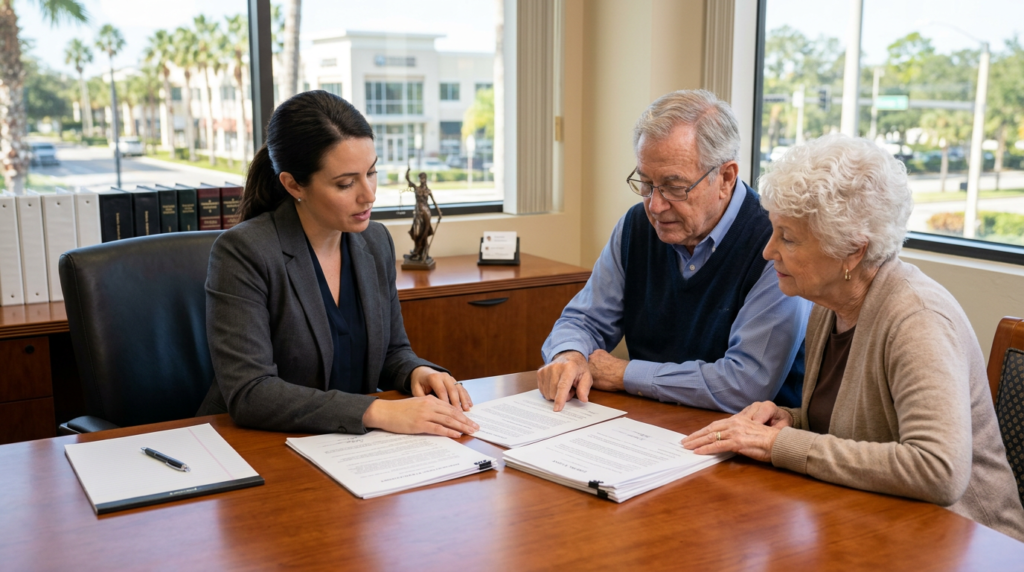
Quick answer: Hire an estate planning attorney when you own a home, have children, run a business, want to reduce probate friction, or need a plan for incapacity. A lawyer can match your goals to the right documents—often a will plus durable power of attorney and health care directives, and sometimes a revocable living trust—then make sure everything is executed and coordinated correctly so it holds up when your family needs it.
Signs You Shouldn’t Wait
If you have minor kids, a blended family, property in more than one state, or a loved one with special needs, waiting can leave your family stuck in court processes or fighting over unclear instructions. Even a “simple” situation can become messy if beneficiary designations, joint ownership, and a will don’t match.
A good Tampa estate planning attorney also becomes valuable the moment you start thinking about incapacity. In general Florida practice, if you’re unable to manage finances or make decisions and you don’t have valid advance directives in place, families sometimes end up in guardianship proceedings to get legal authority to act. Florida’s guardianship framework is in Chapter 744 of the Florida Statutes (see Fla. Stat. Ch. 744).
Another sign is procrastination caused by confusion. If you’re not sure what you need (will vs. trust, who should serve as trustee, how to name guardians, how to protect a spouse while preserving assets for kids), that’s exactly the point of hiring help.
Florida Probate in Plain English (and Why Tampa Details Matter)
In Florida, probate is the court-supervised process of identifying assets, paying valid debts, and transferring what’s left to the right people. The usual pinch points are locating all assets, getting appraisals when needed, dealing with creditor claims, and fixing title issues (like an old deed, missing beneficiary, or an account that can’t be accessed without “letters of administration”).
Most estates fall into either formal administration or summary administration. Formal administration is the full process with a personal representative and ongoing court oversight. Summary administration is a simplified route that’s generally available only in narrower situations (commonly when the estate qualifies by value or enough time has passed since death), but it still requires accurate paperwork and proper notice. Local court procedures in Hillsborough County—filing requirements, scheduling, and how quickly orders are processed—can affect real-world timelines even when the law is the same statewide.
Planning isn’t just about “avoiding probate”; it’s about making the parts you can’t avoid smoother and less expensive for the people you care about.
Quick Decision Checklist (Plus Will vs. Trust Guidance)
Hire now if: you have minor children; you’re seriously ill; you’re in a second marriage or have kids from another relationship; you own a business; you have a disabled beneficiary; you have significant conflict in the family; or someone is already helping you pay bills or manage accounts informally.
Schedule within 30 days if: you bought a home in Florida, had a baby, got married/divorced, moved to Florida, received an inheritance, opened new retirement accounts, or your chosen decision-maker moved away or is no longer a good fit.
Consider DIY only if: your situation is truly simple (one person, modest assets, no minor kids, no special-needs planning, no business, and you’re comfortable keeping everything in probate), and you’re confident you can follow Florida execution rules exactly and keep beneficiary designations aligned. In general Florida practice, a will must be signed with the required formalities (including witnesses) to be valid; Florida’s execution requirements are in Fla. Stat. § 732.502.
When a will may be enough: you’re comfortable with probate, most assets already pass by beneficiary designation or joint ownership, and your main goals are naming a personal representative and guardians for minor children.
When a trust is usually worth it: you want smoother management during incapacity, you want to reduce court involvement at death, you own real estate (especially if you may later own property in another state), you have privacy concerns, or you need ongoing control over how and when beneficiaries receive money. A trust only helps if assets are properly titled into it, so “funding” is part of the decision.
What to Bring and What to Ask in the First Consult
Bring a simple list of assets (home, bank accounts, retirement accounts, life insurance, business interests), how each is titled, and any existing estate documents. Also think through your decision-makers: who should handle finances, who should make medical decisions, and who should care for minor children if needed.
Ask any estate planning attorney how they charge (flat fee vs. hourly and what’s included), whether they help with trust funding and deed work, how they review and coordinate beneficiary designations, and what their follow-up process looks like for updates after major life changes. Also ask how they handle incapacity planning in general Florida practice (powers of attorney, health care documents, and what happens if documents aren’t in place) so you understand the real-world consequences before an emergency hits.