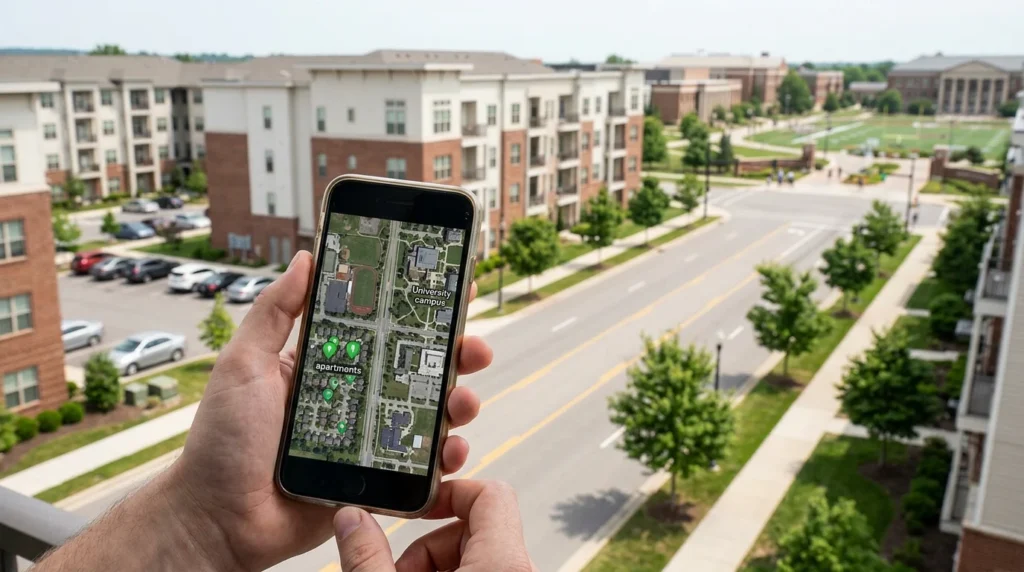
Quick answer: Start by confirming the location really is across from campus and walkable for your daily schedule. Then compare lease structure (individual/by-the-bed vs. joint), bedroom privacy, and whether the unit is furnished. Check for in-unit laundry, realistic parking and guest rules, and safety features like gated entry. Finally, tour the exact floor plan you’ll sign and ask what’s included before committing.
What “Across From Campus” Should Mean Day to Day
“Across from JSU” sounds simple, but you want it to translate into a routine that’s actually easier: quick walks to class, fewer parking headaches, and the ability to run back home between labs, practice, or study sessions. If you’ll be on campus 2+ times per day, prioritize true walkability over “a short drive,” because the time savings stacks up fast.
If you’re comparing options, prioritize places that are clearly marketed as apartments across from Jacksonville State University and also describe themselves as walking distance to JSU. “Near campus” can mean a short drive, which is a totally different experience once you factor in traffic, parking, and time.
Do a quick reality check before you apply: walk the route you’d take to your most common buildings at the time you normally leave (morning rush, evening labs). If it’s more than about 10–15 minutes on foot to where you’ll be most days, treat it as “near” rather than “across,” and decide if that still fits your schedule.
Lease Setup: Individual Leases vs. One Shared Lease
One of the biggest differences in student housing is how the lease is structured. With an individual lease (often called by-the-bed leasing), you sign for your bedroom rather than being jointly responsible for the whole apartment. That can reduce the risk of being on the hook if a roommate moves out or stops paying.
If you don’t already know your roommates, prefer individual leasing and ask what you’re responsible for beyond your room (common-area damages, fees, guest violations). A shared lease can work well if you’re moving in with close friends and you’re all comfortable managing bills and expectations together.
Ask directly what happens if a roommate transfers, graduates early, or breaks the lease. If the answer is that everyone remaining is still liable for the full rent, that’s a shared-risk setup—fine for some groups, stressful for others.
Privacy, Furnishing, and In-Unit Laundry: The “Daily Comfort” Checklist
Look beyond the headline amenities and focus on what you’ll feel every day. If you study at home, take late-night calls, or keep a different sleep schedule than your roommates, private bedrooms should be a must-have. If you’re sensitive to morning bottlenecks, aim for a layout where each bedroom has its own bathroom; if bathrooms are shared, decide if you’re comfortable coordinating schedules.
Furnished units can save you money and hassle during move-in, especially if you’re coming from out of town. If a place is advertised as furnished, ask what that includes (bed, desk, sofa, dining set) so you don’t end up buying duplicates or missing essentials.
In-unit washer and dryer is another make-or-break feature for many students. If you do laundry weekly and hate waiting on machines, prioritize in-unit laundry; if you’re fine planning around it, a shared laundry setup may be acceptable. Either way, confirm whether laundry is inside your apartment or in a separate building.
Amenities and Safety Features That Actually Change Your Experience
A pool, fitness center, basketball court, and dog park can be great—if you’ll use them. If you won’t realistically work out on-site at least 2–3 times per week, a gym you never visit shouldn’t outweigh basics like walk time, lease liability, and laundry convenience.
Safety and access control deserve the same practical lens. A gated entrance can add peace of mind, but you should still ask about lighting, how guests enter, and how maintenance and after-hours issues are handled. During a tour, pay attention to sightlines in parking areas and how secure the building feels at night.
Copy/paste tour checklist (ask for the specific unit/floor plan you’ll sign):
1) What’s the exact walk time to my main buildings (and is there a well-lit route at night)?
2) Exactly what does “furnished” include, and what am I expected to bring?
3) Where is laundry—inside the unit, on the floor, or in a separate building?
4) What are the parking rules, permit costs (if any), and guest parking/overnight guest policies?
5) Is the lease individual/by-the-bed or joint, and what am I financially liable for if a roommate leaves or doesn’t pay?
6) Which utilities are included, and how are any overages calculated?
7) How do maintenance requests work, and what’s the after-hours process for urgent issues?
Once you’ve compared these items across a few properties, review The Pointe at JSU’s current floor plans and policies to see how they line up with what you need.