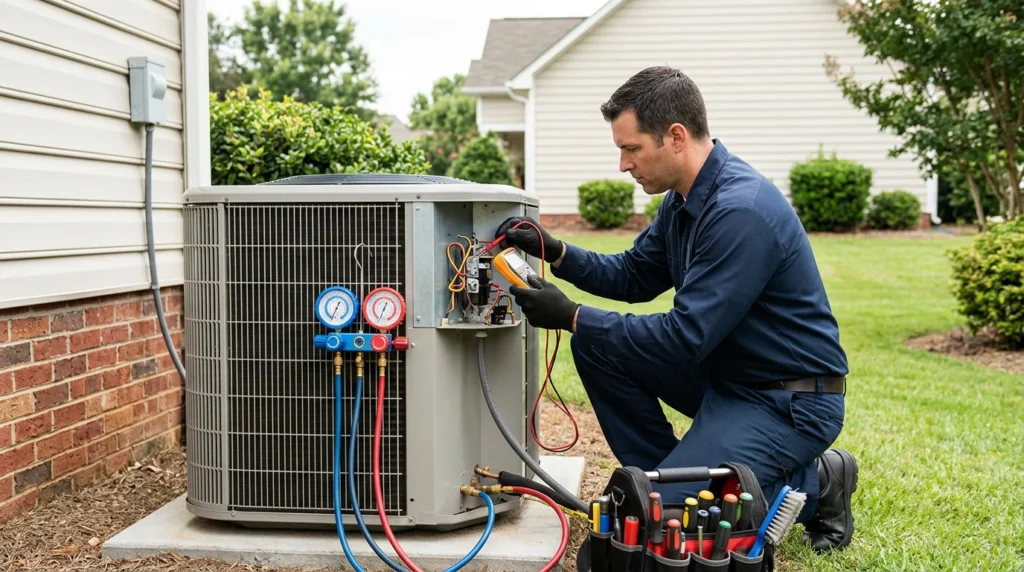
Quick answer: A typical AC tune-up in Watkinsville includes inspecting and testing major components, checking refrigerant performance readings, verifying airflow and temperature split, clearing the condensate drain for safe operation, and confirming thermostat and control functions. The goal is to spot developing issues early, improve reliability during hot spells, and reduce strain that can contribute to breakdowns or higher energy use—without implying that maintenance replaces needed repairs.
What Happens During a Typical Tune-Up
A standard visit usually starts with a quick system overview: the technician asks about comfort problems, odd noises, recent repairs, and how often filters are changed. Then they’ll inspect the indoor and outdoor equipment, looking for loose wiring, oil stains that can hint at refrigerant leaks, corrosion on terminals, and signs of overheating on contactors or capacitors. If you’re comparing options, this is the kind of checklist you should expect from an ac tune up Watkinsville appointment.
Most tune-ups also include measuring temperatures and pressures to see how the system is actually operating. That typically means checking the temperature split between return and supply air, verifying blower operation, and confirming the outdoor fan and compressor start and run properly. The tech may clean the outdoor condenser coil if it’s matted with pollen or grass clippings, and they’ll usually flush or treat the condensate drain to help reduce nuisance shutdowns caused by clogs or float switches.
Finally, they’ll confirm thermostat settings and basic controls, then explain any concerns they found. A good tune-up ends with clear “do this now vs. monitor it” guidance, plus a recommendation for repair when a part is testing out of spec.
Tune-Up Checklist (What Gets Inspected, Tested, Cleaned, or Flagged for Repair)
Here’s a concrete step-by-step checklist you can use to set expectations. Exact steps vary by system type and access, but the categories should look familiar.
- Inspection — inspect/test: cabinet condition, visible refrigerant oil staining, insulation on suction line, coil condition, filter fit, blower compartment, line-set rubbing/vibration, outdoor fan blade condition. clean/adjust: basic debris removal at the outdoor unit. recommend repair: damaged insulation, severe corrosion, obvious leaks, cracked drain pan.
- Electrical tests — inspect/test: disconnect and breaker condition (visual), contactor wear, capacitor microfarad reading, motor amperage (where appropriate), wiring tightness and heat discoloration, safety switches. clean/adjust: tighten connections within safe service scope. recommend repair: weak capacitors, pitted contactors, overheated wiring, failing motors, recurring breaker trips.
- Refrigerant performance checks — inspect/test: suction/liquid pressures, superheat/subcooling (as applicable), temperature readings at key points, compare to expected operating range for conditions. clean/adjust: none unless a minor airflow/coil issue is affecting readings. recommend repair: suspected leak investigation, restrictions, metering-device issues, abnormal compressor performance.
- Airflow / Delta-T — inspect/test: return vs supply temperature split, blower operation, obvious duct disconnections near the air handler, static pressure concerns if symptoms point that direction. clean/adjust: replace/seat filter if provided, minor register adjustments if asked. recommend repair: blower problems, severely restricted coil, duct issues beyond quick access.
- Drain safety — inspect/test: drain slope/condition, trap/vent setup (where visible), float switch function (if present), signs of past overflow. clean/adjust: clear/flush the drain line and clean the drain pan area when accessible. recommend repair: cracked pans, failed float switches, persistent clogs suggesting a deeper blockage.
- Thermostat / controls — inspect/test: thermostat operation, staging/cooling calls, sensor placement issues, basic control board indicators (where applicable). clean/adjust: correct simple settings, replace batteries if supplied. recommend repair: communication faults, control board errors, short-cycling tied to control issues.
Problems a Tune-Up Can Catch (and What It Can’t Fix)
Many summer no-cool calls start as small issues that show up in testing before the system quits. Weak capacitors, pitted contactors, and loose electrical connections can cause hard starts, short cycling, or a compressor that struggles on the hottest afternoons. Finding those early can reduce the chances of an inconvenient failure, but it doesn’t guarantee one won’t happen.
Airflow problems are another common find. A dirty filter is obvious, but techs also look for blower wheel buildup or a clogged evaporator coil that can lead to icing. Drain line issues can also show up as intermittent shutdowns if a float switch is tripping; clearing the drain can help reduce repeat trips, especially during humid weeks.
Refrigerant-related problems are handled carefully. Refrigerant doesn’t get “used up,” so low charge typically suggests a leak or an incorrect previous adjustment. A tune-up can identify abnormal readings and recommend next steps (like leak checking), but it won’t “tune away” a leak.
What’s Not Included and What to Do Next
Most tune-ups are meant for inspection, testing, and light cleaning—not major corrective work. Common items that are often not included unless quoted separately: major electrical repairs, replacing capacitors/contactors/motors, refrigerant added, leak detection/repair, deep evaporator coil cleaning that requires disassembly, duct cleaning or duct sealing, and resolving long-standing airflow design issues.
Use this simple decision tree for next steps. DIY prep: replace the filter, clear vegetation 18–24 inches around the outdoor unit, and make sure the thermostat is set to “cool” with fresh batteries if it uses them. Schedule maintenance: if the system is cooling but you want it checked before peak heat, you’ve skipped a yearly check, or you’ve noticed mild issues like longer run times or slightly weaker airflow. Request a repair call instead of maintenance: if the system won’t turn on, is blowing warm air, is tripping breakers, has ice on the lines, is leaking water steadily, or is making loud grinding/squealing noises.
If you’re unsure which category you’re in, describe the symptoms and ask to be booked appropriately; Billy Butler HVAC can help you decide whether a tune-up slot or a repair diagnostic makes more sense.