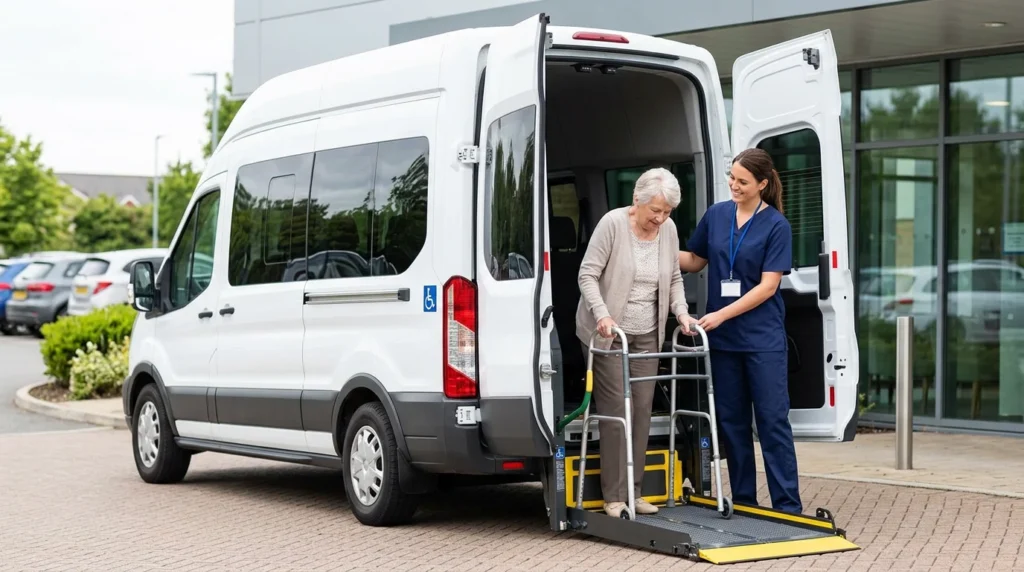
Quick answer: Long-distance non-emergency medical transportation is planned travel for patients who are medically stable but need help getting to a hospital, rehab, dialysis, specialist visit, or discharge destination in another city or state. A transport team matches the vehicle and staffing to the patient’s needs, coordinates pickup timing with the facility, manages mobility and monitoring during the trip, and handles safe transfer at drop-off.
What to Expect From the Process
Long-distance non-emergency medical transportation usually starts with a quick intake: where the patient is now, where they’re going, the preferred date/time, and what kind of help they need to travel safely. The goal is a smooth handoff between facilities or between a facility and home, without using an emergency ambulance.
Once needs are clear, the trip is scheduled around the sending facility’s discharge or appointment window. Good planning includes confirming the exact pickup location (room, wing, entrance), any required paperwork, and who can receive the patient at the destination. For long drives, the team also plans rest stops and contingencies so the patient isn’t rushed or stranded if the schedule shifts.
On the day of transport, the crew assists with transfer to the vehicle, secures the patient appropriately, and keeps comfort and safety front-and-center during the ride. At arrival, they coordinate the final transfer—into a bed, wheelchair, or facility intake—so the patient isn’t left waiting at the curb.
A Simple Step-by-Step Workflow
Most long-distance transports follow a predictable workflow. Here’s a concrete way to think about it:
Intake
- Confirm pickup/drop-off addresses, timing window, and who will be present to release/receive the patient.
- Collect basics: mobility level, recent procedures, oxygen use, and any infection-control precautions.
Clinical clearance
- Verify the patient is appropriate for non-emergency travel (stable and safe for the planned level of support).
- Clarify any “must-haves” for travel: position restrictions, pain control plan, oxygen settings, or suction needs.
Vehicle and staffing match
- Select the transport type (wheelchair, stretcher, or medically staffed) based on transfer ability and medical needs.
- Confirm equipment needs such as ramps/lifts, securement, or space for a caregiver.
Facility coordination
- Coordinate discharge timing, room/wing access, and paperwork handoff with the sending facility.
- Confirm the receiving facility’s intake process and the exact destination entrance/unit.
Day-of transfer and transport
- Perform safe transfer and securement, then proceed with planned stops and comfort checks.
- Maintain communication if delays occur so facilities and family aren’t guessing.
Arrival handoff
- Transfer the patient to the receiving bed/wheelchair and deliver required documents/medications.
- Confirm the receiving party has accepted the patient before leaving.
Vehicle, Staffing, and Monitoring Options
Common options in the industry include wheelchair-accessible vans, stretcher vehicles, and medically staffed transports with additional clinical capability. The right match depends less on miles and more on the patient’s ability to sit, transfer, and remain stable for the duration of the trip.
Use this simple decision table as a starting point:
| Common transport type | Best fit (typical) | Key questions to ask |
|---|---|---|
| Wheelchair transport | Patient can sit upright for the trip and can transfer with minimal assistance (or with a lift), without needing continuous medical monitoring. | Can they safely sit for hours? Are there stairs at either end? Can a caregiver ride along if needed? |
| Stretcher transport | Patient cannot safely sit upright, cannot transfer reliably, needs to lie flat or semi-reclined, or has significant pain/weakness that makes sitting unsafe. | Do they need to be flat? Any weight-bearing restrictions? What equipment is used for loading/unloading? |
| Medically staffed transport | Patient is stable but needs a higher level of observation or support during travel (for example, oxygen management, frequent assessments, or higher risk of deterioration). | What level of staff rides along? What monitoring is available? What’s the plan if the patient’s condition changes? |
Monitoring and staffing also vary by service level. Common options in the industry range from basic observation and periodic checks to more frequent assessments with staff trained to respond to changes. If oxygen is involved, confirm how the flow rate (liters per minute), delivery method, and total duration are planned for a long route, including buffer time for delays.
How to Choose a Provider and What to Have Ready
Look for a provider that asks detailed questions rather than giving a one-size-fits-all quote. A careful intake that covers mobility, transfer ability, oxygen needs, recent procedures, and exact pickup/drop-off logistics is usually a better sign than quick assurances.
Before you call any provider, have this ready so you can get an accurate plan:
- Discharge summary or a brief clinical note describing current condition and restrictions.
- Mobility status: walk, wheelchair, or stretcher; ability to transfer; stairs at either location.
- Oxygen details (if used): liters/minute, continuous vs. as-needed, and device type.
- Pickup specifics: facility name, room number, unit/wing, and the best entrance for transport.
- Receiving details: destination address, unit/department, and a direct contact name/phone for handoff.
For help arranging long-distance medical transport and coordinating the details with facilities, Managed Medical Transport, Inc. is a place to get assistance.